
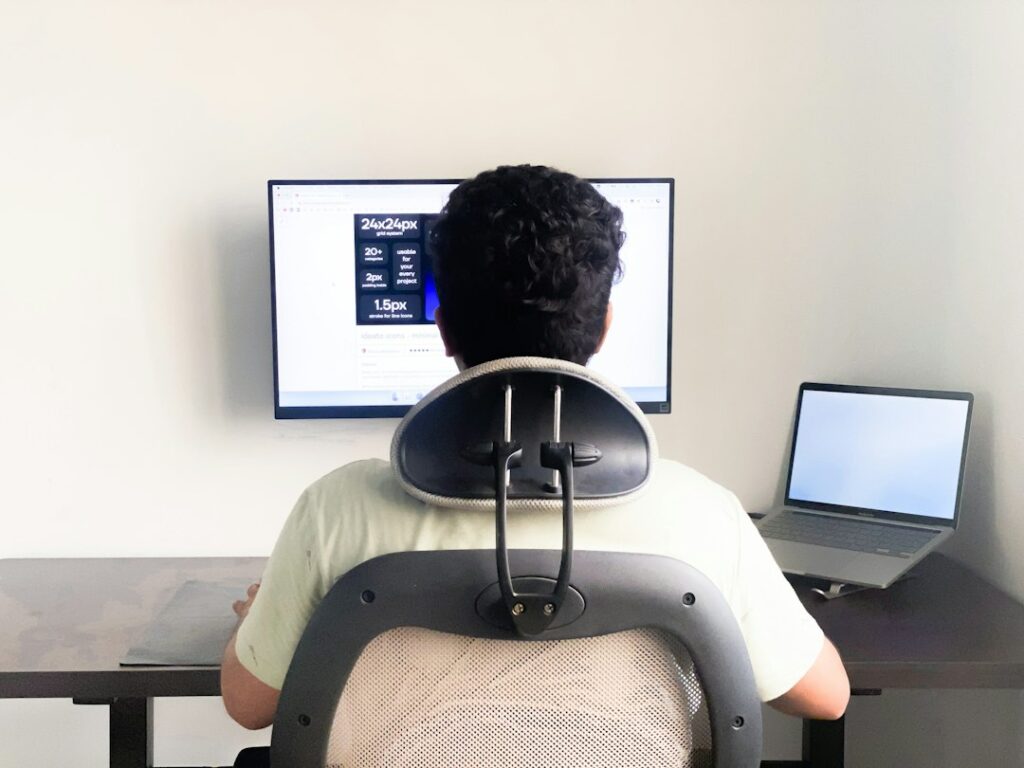
Poor posture can contribute to headaches, especially when the head, neck, and shoulders remain in a strained position for long periods. It is not the only possible cause, though, and posture-related pain can resemble tension headaches, migraine, or headaches linked to other health conditions.
How can poor posture trigger a headache?
Posture changes how the muscles and joints of the neck, upper back, and shoulders share the work of supporting the head. When the head stays forward, tilted, or bent downward for too long, some muscles must remain contracted instead of relaxing normally.
This may lead to:
- Tight muscles at the base of the skull
- Neck and shoulder fatigue
- Irritated joints in the upper neck
- Reduced comfort when turning or extending the neck
- Referred pain that travels from the neck into the head
A forward-head position is common during phone use, computer work, reading, driving, and household tasks. Even a small change in head position can increase the workload on the neck when it is maintained for hours.
What does a posture-related headache feel like?
A headache linked to neck strain often begins with stiffness, pressure, or aching near the base of the skull. The discomfort may spread toward the forehead, temples, or behind one eye. Some people notice that the pain is worse on one side or increases when the neck moves.
Common features may include:
- A dull, tight, or pressure-like sensation
- Tenderness in the neck, shoulders, or upper back
- Reduced neck movement
- Head pain after prolonged sitting or screen use
- Relief after changing position, moving, resting, or applying gentle heat
These symptoms can overlap with tension-type headaches and cervicogenic headaches. A cervicogenic headache is head pain caused by a problem or irritation in the neck. A person may have neck discomfort with it, but neck pain is not always obvious.
Is every headache caused by posture?
No. Posture is only one possible contributor. Headaches can also be related to migraine, dehydration, lack of sleep, eye strain, illness, medication changes, sinus problems, jaw tension, hormonal changes, or stress.
Migraine may involve throbbing pain, nausea, vomiting, or sensitivity to light and sound. A posture-related headache is more often associated with muscle tightness and neck movement, although symptoms can overlap. Because of this overlap, repeatedly assuming that every headache is caused by posture can delay appropriate evaluation.
A useful clue is whether headaches follow a consistent pattern. For example, pain that develops after several hours at a laptop and improves after movement may suggest a musculoskeletal contribution. That pattern does not prove posture is the sole cause.
Can phone and computer use make the problem worse?
Yes. Looking down at a phone or tablet places the neck in a flexed position. The concern is usually not a single brief period of use, but repeated or prolonged positioning without breaks.
Computer work can create similar strain when:
- The monitor is too low or too far away
- The chair does not support the back
- The shoulders remain lifted or rounded
- The elbows and wrists are unsupported
- The person stays in one position for hours
During winter in Haverstraw, NY, some residents may spend more time indoors using computers, gaming systems, or mobile devices. Heating-related dryness, less outdoor activity, and disrupted sleep can also contribute to headaches, so posture may be only one part of the pattern.
What posture changes may help?
The goal is not to hold a rigid “perfect” posture all day. Healthy posture is comfortable, varied, and supported by regular movement.
Try these adjustments:
- Keep the screen near eye level so the chin does not constantly drop.
- Sit with the hips supported by the chair and both feet resting on the floor or a stable footrest.
- Let the shoulders relax rather than pulling them forcefully backward.
- Keep frequently used items within easy reach to avoid repeated twisting.
- Hold a phone closer to eye level instead of bending the neck downward.
- Change position regularly instead of waiting until discomfort begins.
- Take brief movement breaks during long periods of sitting.
- Use gentle neck and upper-back movements that do not increase pain.

A simple reminder to stand, walk briefly, or reset the shoulders every 30 to 60 minutes may be more useful than trying to maintain one stiff position.
What can be done at home?
For mild, familiar symptoms, conservative steps may help. Resting briefly, drinking water, using a warm compress on tight neck muscles, and reducing prolonged screen viewing can be reasonable starting points.
Gentle movement is usually preferable to keeping the neck completely still. Slow shoulder rolls, comfortable neck rotation, and light upper-back movement may reduce stiffness. Stop if an exercise causes sharp pain, dizziness, numbness, weakness, or worsening symptoms.
Sleep position may also matter. A pillow that keeps the head reasonably aligned with the rest of the spine can reduce overnight neck strain. Sleeping with the neck sharply bent or rotated for long periods may leave the muscles irritated in the morning.
Pain medication should be used only as directed on its label or by a qualified healthcare professional. Frequent reliance on headache medication can sometimes contribute to medication-overuse headaches.
When should a headache be evaluated?
Headaches that are frequent, worsening, unusually severe, or interfering with sleep and daily activities deserve medical evaluation. It is also sensible to seek guidance when a new headache repeatedly occurs with neck pain, visual changes, nausea, balance problems, or pain extending into an arm.
Urgent medical care is appropriate for a sudden, extremely severe headache or a headache accompanied by:
- Weakness, numbness, facial drooping, confusion, or trouble speaking
- Fainting, seizure, or significant loss of balance
- New vision loss or double vision
- Fever with a stiff neck or a widespread rash
- Repeated vomiting
- A recent significant head or neck injury
These warning signs are not typical of ordinary posture-related muscle tension.
How can residents track whether posture is involved?
A brief headache record can reveal patterns. Note the time the headache begins, recent screen or driving time, sleep quality, meals, hydration, stress, neck stiffness, and what makes the pain better or worse.
Look for relationships rather than isolated events. If symptoms repeatedly appear after long periods of looking down and improve with movement, posture may be contributing. If headaches occur independently of position, include migraine, sleep, medication, vision, and other possible factors in the discussion with a healthcare professional.
Bad posture can contribute to headaches, but it should be viewed as a modifiable factor rather than a complete diagnosis. Comfortable positioning, frequent movement, adequate sleep, and attention to warning signs provide a practical starting point for understanding recurring head and neck pain.
