
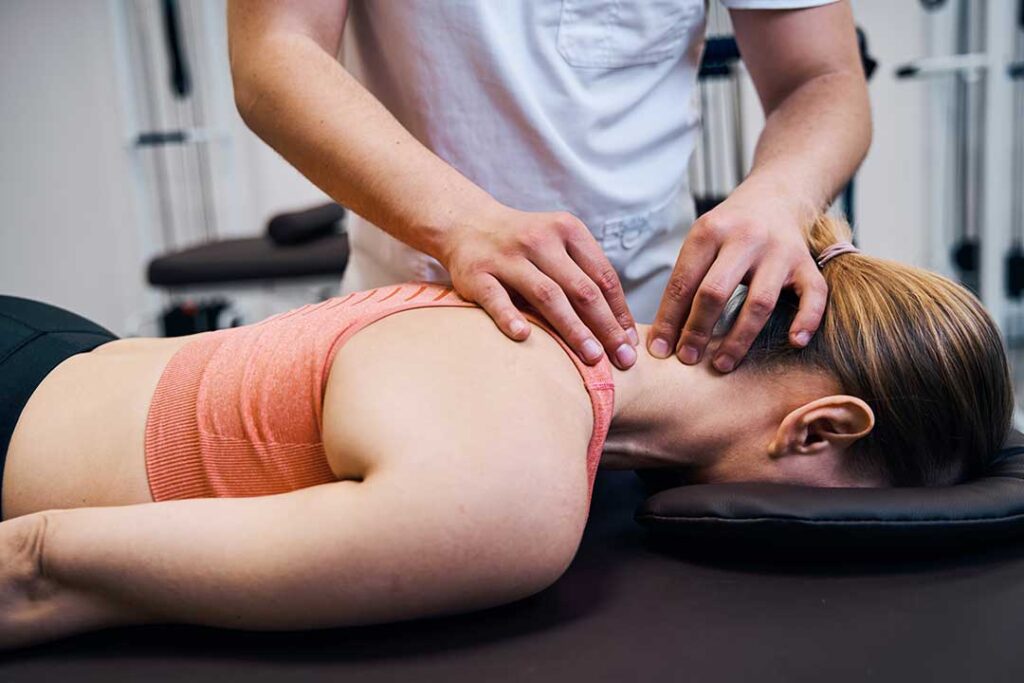
Tension headaches often feel like steady pressure, tightening, or a dull ache around the forehead, temples, or back of the head. Tight muscles in the neck, shoulders, jaw, and upper back can contribute, especially after long periods of sitting, screen use, driving, stress, or sleeping in an awkward position.
Gentle stretching may reduce muscle tension and help prevent some headaches, but it should feel easy rather than forceful. Stretching is not a substitute for medical evaluation when headaches are severe, unusual, or accompanied by concerning symptoms.
Which stretches may help a tension headache?
Slow neck, shoulder, and upper-back movements can ease stiffness that develops around the muscles attached to the skull, neck, and shoulder blades. Mayo Clinic includes gentle neck stretching, massage, heat, relaxation, and regular physical activity among self-care measures for tension-type headaches. ([mayoclinic.org](https://www.mayoclinic.org/diseases-conditions/tension-headache/in-depth/headaches/art-20047631?utm_source=openai))
Try the following routine while seated or standing with both feet supported.
1. Chin-to-chest stretch
This movement gently lengthens muscles along the back of the neck.
- Sit upright without pushing the chest forward.
- Let the shoulders drop away from the ears.
- Slowly lower the chin toward the chest.
- Stop when a mild stretch is felt along the back of the neck.
- Hold for 15 to 20 seconds, breathing normally.
- Return to a neutral position and repeat two or three times.
Do not pull the head downward with the hands. If the movement causes sharp pain, dizziness, tingling, or arm symptoms, stop.
2. Side neck stretch
This stretch targets muscles along the side of the neck that may become overworked when the head stays tilted or forward.
- Keep the nose facing straight ahead.
- Slowly bring the right ear toward the right shoulder.
- Keep the opposite shoulder relaxed rather than lifting it.
- Hold for 15 to 20 seconds.
- Repeat on the other side.
A mild pulling sensation is expected. The head should not be rotated during this stretch, and the shoulder should not be forced downward.
3. Gentle neck rotation
Limited neck movement can develop after hours at a desk, in a vehicle, or while looking down at a phone.
- Sit tall and relax the jaw.
- Slowly turn the head to the right until a comfortable stretch is felt.
- Return to the center.
- Turn slowly to the left.
- Repeat five times on each side.
Move only within a comfortable range. Avoid quick, repeated twisting or trying to “crack” the neck.
4. Shoulder rolls
Shoulder rolls can help reduce the guarded posture that often accompanies stress.
- Lift both shoulders gently toward the ears.
- Move them backward, then down.
- Complete five slow circles.
- Reverse direction for another five circles.
Keep the breathing relaxed. This is a mobility exercise, not a strength test.
5. Upper-back stretch
Tension between the shoulder blades can add to neck and head discomfort.
- Clasp the hands in front of the body, or reach the arms forward without locking the elbows.
- Gently round the upper back as if widening the space between the shoulder blades.
- Keep the chin slightly tucked.
- Hold for 15 to 20 seconds.
- Relax and repeat two or three times.
This stretch should be felt across the upper back, not as pain in the shoulders or arms.
6. Doorway chest stretch
A forward-rounded posture can shorten the chest muscles and encourage the head to drift in front of the shoulders. Mayo Clinic notes that maintaining a level head and avoiding a slumped sitting position may help reduce muscle tension. ([mayoclinic.org](https://www.mayoclinic.org/diseases-conditions/tension-headache/diagnosis-treatment/drc-20353982?utm_source=openai))
- Stand in a doorway with one forearm resting lightly against the frame.
- Place the elbow around shoulder height.
- Step forward slightly until a gentle stretch is felt across the chest.
- Hold for 15 to 20 seconds.
- Repeat on the other side.
Do not arch the lower back or force the shoulder backward.
How often should these stretches be performed?
For occasional stiffness, a short routine lasting five to ten minutes may be reasonable once or twice a day. A few gentle movements during the day can also be useful before discomfort builds.
Residents who spend time at a computer, work from home, commute, or manage household tasks in cooler weather may notice that the neck stiffens when one position is held too long. A practical approach is to change position every 30 to 60 minutes, walk briefly, relax the shoulders, and look away from the screen.
Stretching should not be used as a test of flexibility. The goal is comfortable motion, not reaching a certain distance or creating a strong pulling sensation.
Should heat be used before stretching?
Warmth may make stretching more comfortable when the neck and shoulders feel tight. A warm shower, low-setting heating pad, or warm towel can be applied for a short period before gentle movement. Mayo Clinic lists heat, massage, and relaxation as options that may ease tense muscles associated with tension-type headaches. ([mayoclinic.org](https://www.mayoclinic.org/diseases-conditions/tension-headache/in-depth/headaches/art-20047631?utm_source=openai))
Protect the skin from excessive heat, and do not fall asleep while using a heating pad. Cold may feel better for some people, particularly when the forehead feels hot or sore. Individual response varies.
What other habits can reduce tension around the head and neck?
Stretching works better when combined with habits that reduce repeated strain.
- Keep the screen near eye level instead of looking down for long periods.
- Support the lower back while sitting.
- Keep the feet supported and allow the thighs to remain roughly level.
- Avoid holding the phone between the ear and shoulder.
- Drink water regularly and avoid skipping meals.
- Use slow breathing to reduce jaw, shoulder, and neck bracing.
- Take regular walks or perform other moderate activities as tolerated.
- Notice whether teeth clenching, poor sleep, or prolonged stress coincides with headaches.
Poor posture can increase tension in the upper back, neck, and shoulders, while regular activity and stress-management practices may help prevent some tension headaches. ([mayoclinic.org](https://www.mayoclinic.org/diseases-conditions/tension-headache/in-depth/headaches/art-20046707?utm_source=openai))
When should stretching be stopped?
Stop immediately if stretching causes increasing pain, numbness, tingling, weakness, balance problems, faintness, vision changes, or pain that travels into an arm. Avoid neck stretching after a significant injury unless a qualified medical professional has provided specific guidance.
Seek urgent medical care for a sudden, extremely severe headache; a headache following a head injury; or headache with confusion, fainting, seizure, fever and stiff neck, new weakness, trouble speaking, or significant vision loss. A new or progressively worsening pattern also deserves medical assessment rather than repeated self-treatment.
Frequent headaches may also require a closer look at sleep, medications, vision, jaw tension, blood pressure, stress, and other possible contributors. Keeping a simple record of timing, duration, symptoms, activities, and possible triggers can help clarify patterns. The NHS recommends tracking recurring headaches and seeking evaluation when self-care and exercise do not improve them. ([nhs.uk](https://www.nhs.uk/conditions/tension-headaches/?utm_source=openai))
A gentle routine should leave the neck feeling looser, not irritated. If symptoms repeatedly return despite reasonable changes in posture, movement, rest, and hydration, the pattern may not be a simple tension headache and should be evaluated appropriately.
